While scrolling down my timeline on Instagram, I came across a meme stating that we should only be consuming six French fries per serving. The idea that people should only eat six fries per serving started from a study by Harvard School of Public Health. The study looked at how eating fried potatoes, like French fries, might affect weight gain over time. However, the study didn’t exactly say to only eat six fries. This suggestion likely came from people misunderstanding or simplifying the study’s findings. As a result, the idea spread quickly, even though the study itself didn’t specifically recommend such a small serving size.

Credit: Instagram/memezar
Step 1: Understand Why It’s Important
When I heard about the claim that a Harvard study suggests eating only six fries per serving, I felt unsure. It sounded too simple compared to what I know about healthy eating. So, I knew I had to check it out to see if it was true.
Step 2: Think About if it Makes Sense
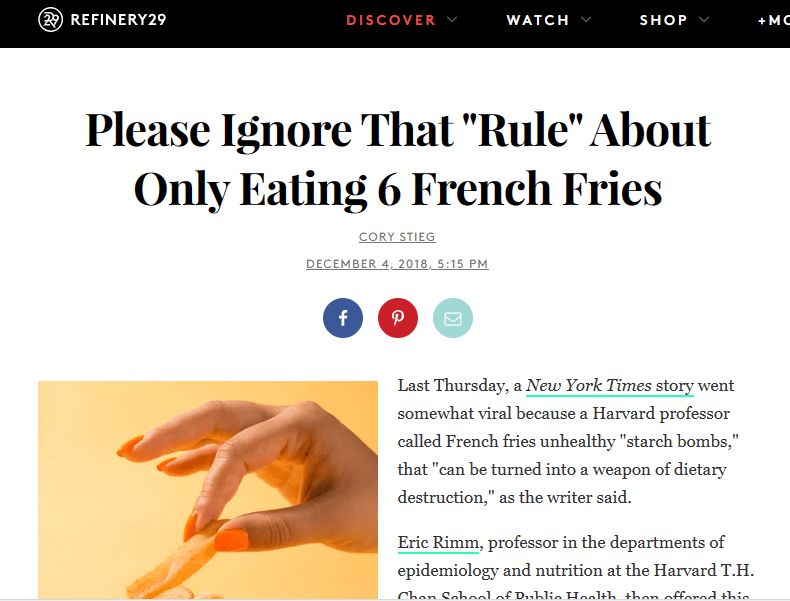
Before I did anything, I thought about whether the claim sounded believable. Eating only six fries per serving didn’t seem right to me. I personally eat about 20 fries per serving, and it made me wonder if I needed to look into it more and found this on Refinery’s website.
Step 3: Look for Information
I searched online for a study from Harvard that discussed this topic, and I was able to find it. However, upon reading the article, I became skeptical of the claim and felt the need to investigate further to confirm its validity.

Step 4: Read Different Sources
I checked out a bunch of different websites and articles to see what other people were saying about the claim. It turns out, most experts including CNN, agree with the idea of only eating six fries. After skimming through various articles, it appears that experts advise limiting French fry intake due to their high calorie, unhealthy fat, and sodium content, as well as the formation of harmful compounds during frying. Keeping servings to just six fries helps to control calorie intake and reduces health risks associated with excessive fried food consumption.
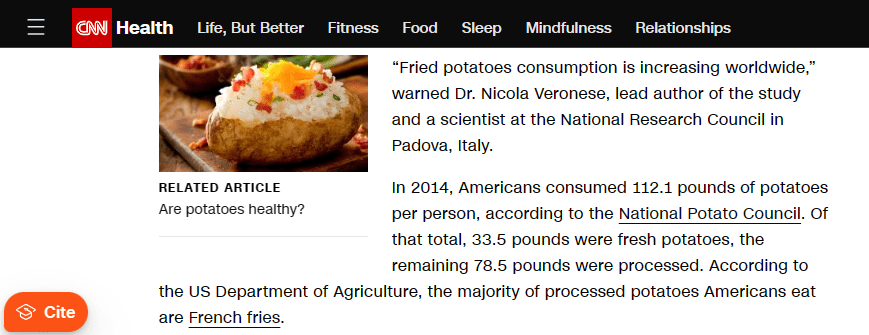
The New York Times recently featured an article questioning the healthiness of French fries, which isn’t a new revelation to many. However, a study discussed in the article suggests that frequent consumption of French fries may shorten lifespan. This study, published in the American Journal of Clinical Nutrition in June 2017, followed 4,400 older adults over eight years. It found that eating French fries more than twice a week was associated with a doubled risk of death, even after considering factors like obesity, physical activity, smoking, and alcohol consumption. While the study points out potential health risks associated with French fries, it does not conclusively prove that the fries themselves are solely responsible for the increased mortality rates among frequent consumers.

Step 5: Listen to Experts
I looked for advice from people who know a lot about food and health. Experts and nutritionists caution against the consumption of French fries despite potatoes being vegetables. Eric Rimm, a professor at Harvard T.H. Chan School of Public Health, describes potatoes as “starch bombs” lacking in essential nutrients found in other vegetables. Deep frying potatoes in oil and adding toppings like salt or cheese can turn them into unhealthy choices linked to obesity, diabetes, and cardiovascular disease due to their high glycemic index.
Step 6: Read Studies
I looked at some studies about fries and health online. A study in The American Journal of Clinical Nutrition found that consuming fried potatoes regularly increases the risk of mortality. Despite these health concerns, Americans have a significant appetite for French fries, with potato products accounting for a large portion of vegetable consumption in the country. While some say eating too many fries isn’t good for you, none of them said you should only eat six at a time. So, where did they get this specific figure from?
Step 7: Watch out for Deception
I made sure to think about whether the claim tried to trick me. Even though it mentioned Harvard, this could be deceptive by suggesting that consuming only six French fries is healthy without considering overall diet and lifestyle. It may give a false impression of healthiness and overlook the importance of balanced nutrition and moderation in dietary choices.
Conclusion:
After thorough examination, I concluded that the assertion “Harvard Study Says We Only Need to Eat 6 Fries per Serving” likely aims to convey that consuming fewer fries is healthier rather than simply consuming six fries per serving. It’s a good reminder to always question things we see online and make sure to look for reliable information, especially when it comes to our health.
After investigating using the SIFT approach, I did manage to find solid evidence to support the claim. This is a good reminder to always question things we see online and make sure to look for reliable information, especially when it comes to our health. Verifying information when I’m skeptical or unsure is essential to ensure that I base my beliefs and decisions on accurate facts. When encountering a claim that seems far-fetched, I take a moment to pause and assess its credibility.
Seeking corroboration from multiple sources is another crucial step in my verification process. If other credible sources support the claim, it increases its reliability. If there’s conflicting information, I continue my investigation to uncover the truth. Feedback from experts in the relevant field helps validate or debunk the claim. Additionally, I highly recommend reviewing evidence such as peer-reviewed research or official reports to better verify the accuracy of any claim. Lastly, I suggest you consider the motivations behind the claim and any potential biases, which aids in assessing its credibility. By following these steps and applying critical thinking skills, one can ensure that the information is grounded in truth and accuracy, which ultimately avoids the spread of misinformation.

 PM Says