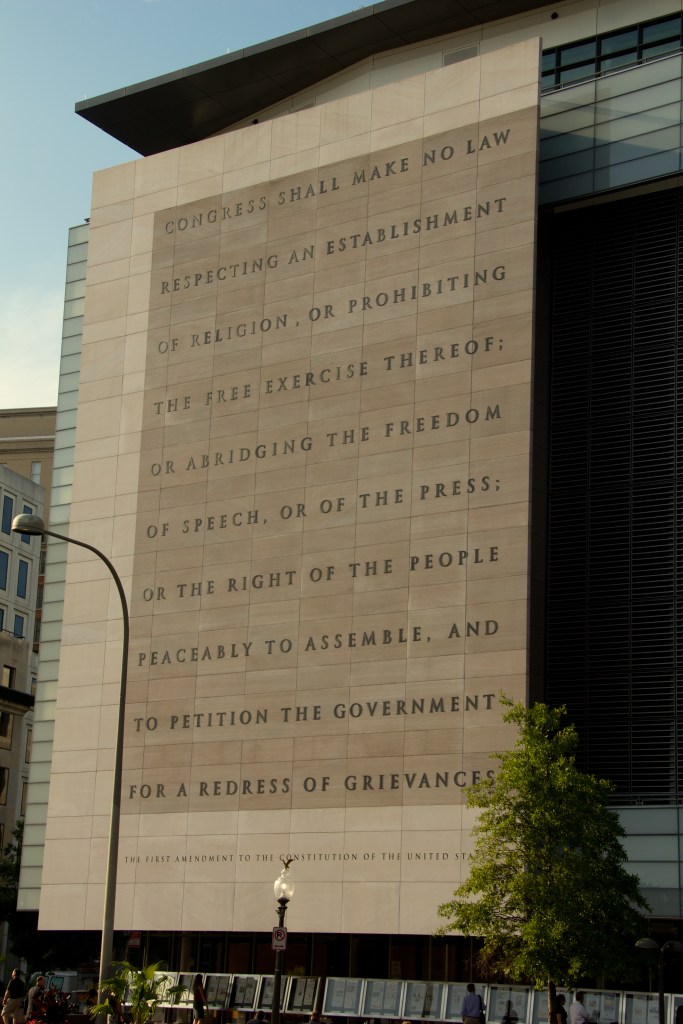
Photograph by Mike Peel (www.mikepeel.net)
In the ever-evolving landscape of journalism, the First Amendment serves as a shield, protecting reporters and news outlets. However, as with any shield, there are instances where its protection is jeopardized. Let’s dive into the details of when the First Amendment acts as a protective shield for the media and when it might face some challenges.
The First Amendment serves as a superhero designed to protect reporters, allowing them to fulfill their crucial role in society—holding the powerful accountable and informing the public. In instances where journalists expose truth, challenge authority, or report on matters of public interest, the First Amendment acts as an impenetrable shield, ensuring that democracy stays strong and resilient. It’s like the dynamic superhero duo we never realized was the ideal match!
However, this shield is not absolute. Instances involving potential harm, such as disclosing sensitive national security information, might challenge the protective umbrella of the First Amendment. Striking a balance between the public’s right to know and protecting national interests is a delicate dilemma that courts often navigate.
Weaponized Defamation Lawsuits: Should We be Concerned?
The weaponization of defamation lawsuits against members of the media raises valid concerns. As plaintiffs wield the legal system as a tool to silence or intimidate journalists, the First Amendment’s shield is put to the test. It prompts reflection on whether defamation claims should be an exception to the protection granted by the First Amendment. For example, stating that someone has cancer may harm their reputation, yet it may not be considered defamatory, as the law may choose not to address such reputational affronts; the determination of actual reputation damage is often a matter for damages, and even at that stage, an actual injury may not always be necessary for a cause of action as David Anderson refers to in Rethinking Defamation.
Counterarguments in defamation suits often revolve around proving the statements in question are false and harmful. Yet, the thin line between legitimate criticism and defamation poses challenges. Plaintiffs must address the public interest in the information published, the journalist’s intent, and the overall context. Striking a balance between protecting reputation and preserving the free flow of information becomes a delicate legal dance.
Anti-SLAPP Statutes: A Beacon of Protection?
Anti-SLAPP (Strategic Lawsuits Against Public Participation) statutes—is an acronym for a legal mechanism designed to counteract the chilling effect of frivolous lawsuits on free speech. These statutes empower defendants, often journalists and media outlets, to quickly dismiss meritless claims and recover legal fees. In navigating the intersection of defamation law and the First Amendment, it should serve as a shield for journalists and news outlets. The rise of weaponized defamation lawsuits against the media raises concerns, which prompts a need for a thorough examination and counterarguments that plaintiffs may need to address in bringing these suits.
Imagine finely tuned legal systems that sound great on paper but end up causing delays and injustices in the real world of high costs and inevitable mistakes. Instead of drowning in complicated rules that try to cover every kind of speech, it might be better to simplify. A fresh perspective could pinpoint the types of communication that require legal attention. It’s about finding a balance – maybe we won’t have a flawless shield for reputation, but in return, we get effective, predictable, and practical protection for the values that truly matter. In the legal landscape, the pursuit of perfection should be abandoned to embrace a system that works for the real world.
Praised for their role in swiftly and economically squashing unfounded claims, these statutes act as shields against the misuse of lawsuits meant to limit free speech. Skeptics may argue that these statutes might create obstacles for plaintiffs with valid claims, challenging the balance between protection and potential hindrance. It’s a thin line between protecting free expression and ensuring a fair shot at justice.
Concerning media, defamation, and the First Amendment, finding a balance is crucial. While the First Amendment should protect democracy’s guardians, there is a need to deal with situations where defamation lawsuits are used as weapons. That’s where Anti-SLAPP statutes come in, offering a way to tackle the chilling effect on free speech.
As the legal landscape continues to evolve, finding equilibrium should become a priority. As food for thought: Fostering awareness and promoting responsible journalism practices can contribute to a healthier media landscape, where legitimate grievances are acknowledged and addressed without compromising the vital protection of free speech. This could serve as a recipe for an even healthier media community.
.

 PM Says
Leave a comment