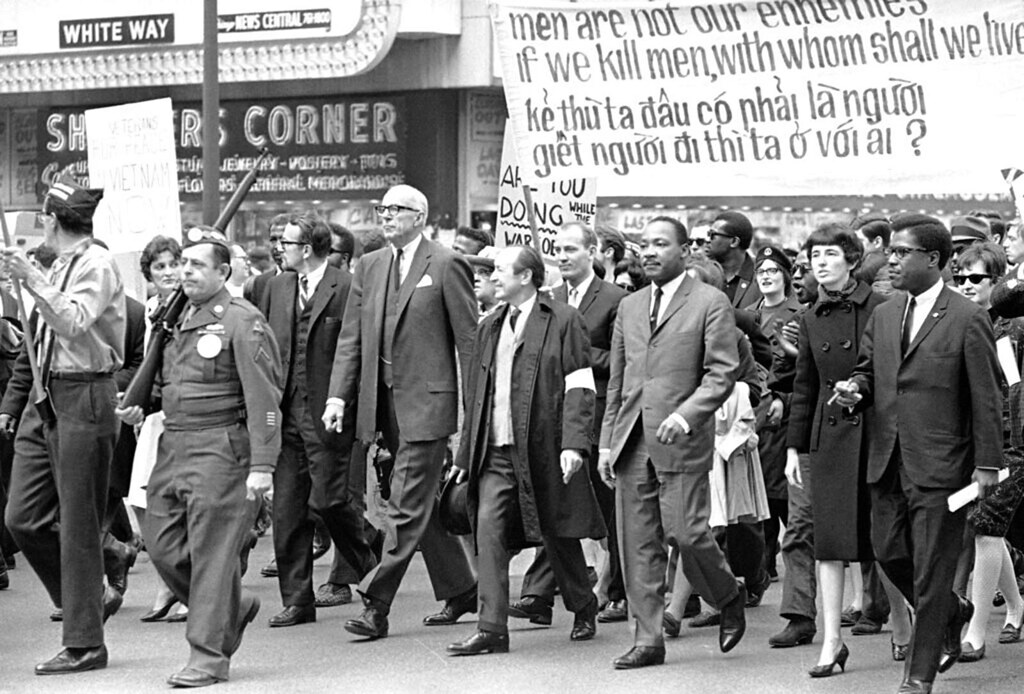
Photo Credit: by manhhai
The MLK March and the George Floyd protests are significant events in the fight against racial injustice, but they occurred in different historical contexts. The MLK March, led by Martin Luther King Jr. during the Civil Rights Movement in the 1960s, focused on achieving civil rights and an
end to racial segregation and discrimination. The George Floyd protests, which began in 2020 after George Floyd’s death, emphasized police brutality and systemic racism and is a reimagined alternative to MLK’s legacy.
While both movements aimed to address racial injustice, this imagined alternative still requires attention and systematic change. In today’s society, young Afro-American men and women are being killed at the hands of law enforcement. There needs to be bigger push for diversity training in the workplace so that law enforcement can develop a better understanding of society outside of their own community.
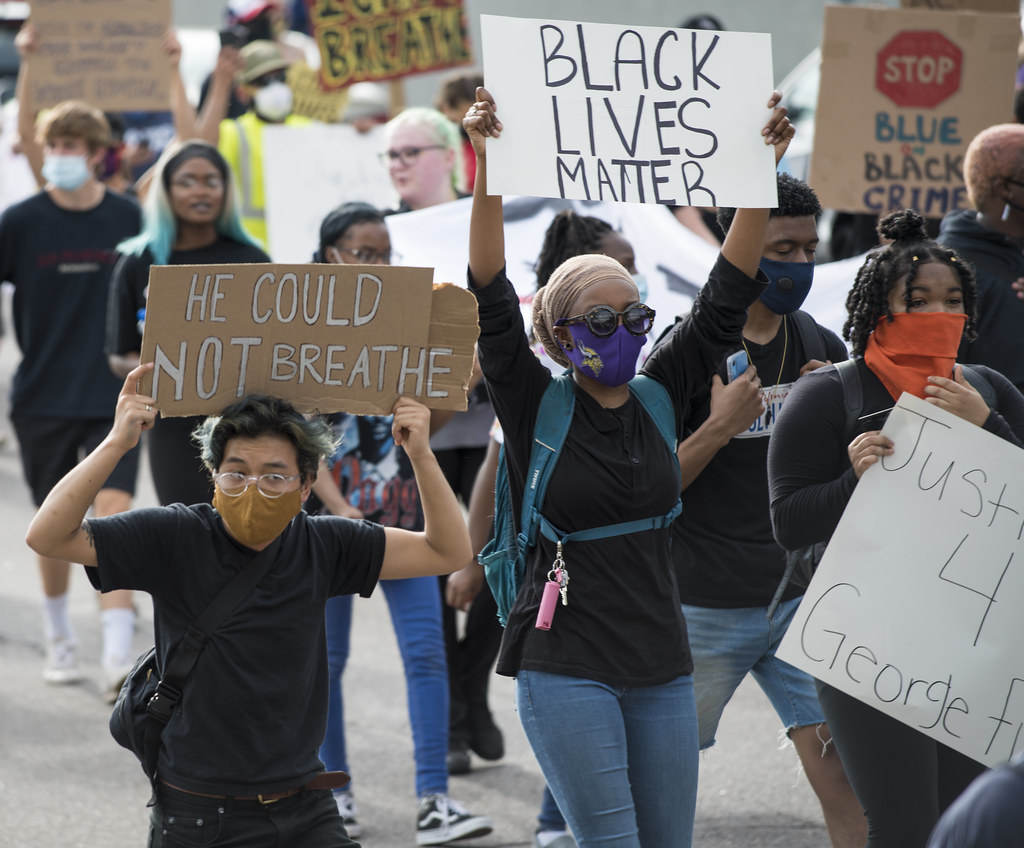
Photo Credit: by Fibonacci Blue
The George Floyd protests, inspired by the Black Lives Matter movement, called for defunding of the police, police reform, and accountability. The methods used to engage other protestors followed the five constructs of civic intentionality in media literacies which are caring, critical consciousness, imagination, persistence, and emancipation. They all aim to re-imagine the work of media literacy to “embrace being in the world with others toward a common good”.
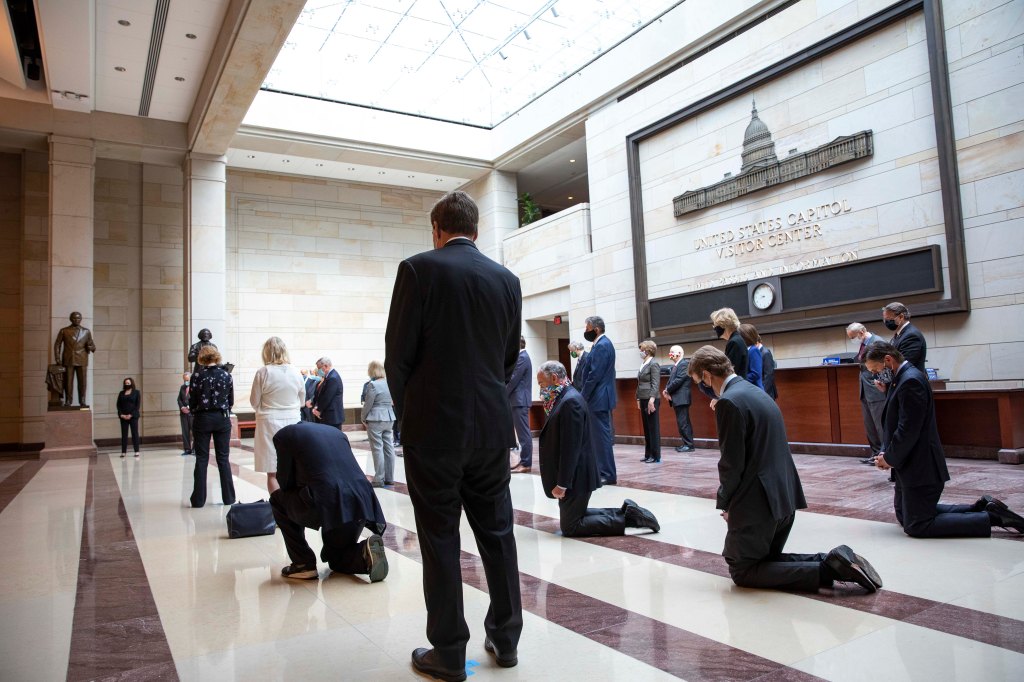
Following the death of George Floyd, there was worldwide public outrage which called for the arrest of all police officers involved. Although the officers were all sentenced to a significant amount of jailtime, racial injustice continues to be a problem plaguing society worldwide. Both movements have contributed to raising awareness, fostering dialogue, and advocating for change. There has been more respect and attention from political leaders to address this long pressing problem, yet there is more work that needs to be done to effectively combat this issue that continues to plague our society. The Senate Democrats held a moment of silence for 8 minutes and 46 seconds Thursday morning, June 4, 2020 in Emancipation Hall to commemorate the lives of George Floyd, Ahmaud Arbery, and Breonna Taylor.
The fight against racial injustice, systemic racism, and police brutality continues to be a pressing concern for many communities around the world. Social media platforms have aided in amplifying voices and allowing for the rapid spread of information. As a result, online movements, petitions, and awareness campaigns have become more impactful and has become integral to the fight for racial equality.
In the wake of these movements, there has been increased criticism of policies, police practices, and institutions that perpetuate racial disparities toward police reform, criminal justice reform, and addressing socioeconomic inequalities. More advocacy is being focused on diverse representation in various sectors, including politics, media, and corporate leadership, to ensure a more inclusive society.
Although progress has been made, challenges still remain. There is a dire need for more equitable education, legislation, and societal change. The ongoing relevance of these movements undermines what our predecessors aimed to change. We shouldn’t be protesting about the same social issues 60 years later. It is important to educate one another about culture, values, and inclusion while acknowledging historical injustices, understanding their impact on current realities, and working collectively toward a more just and equitable future.
There are elements of this alternative reflected in current conditions. We are seeing police accountability. There has been more conversation and explanation around defunding the police. Athletes and no longer chastised for taking a knee during the National Anthem. Juneteenth is now recognized as a national holiday. In fact, the nationwide demonstrations over the death of George Floyd and racial injustices, led companies to address their own issues with racial inequalities and to better support their black employees.

 PM Says
Leave a comment